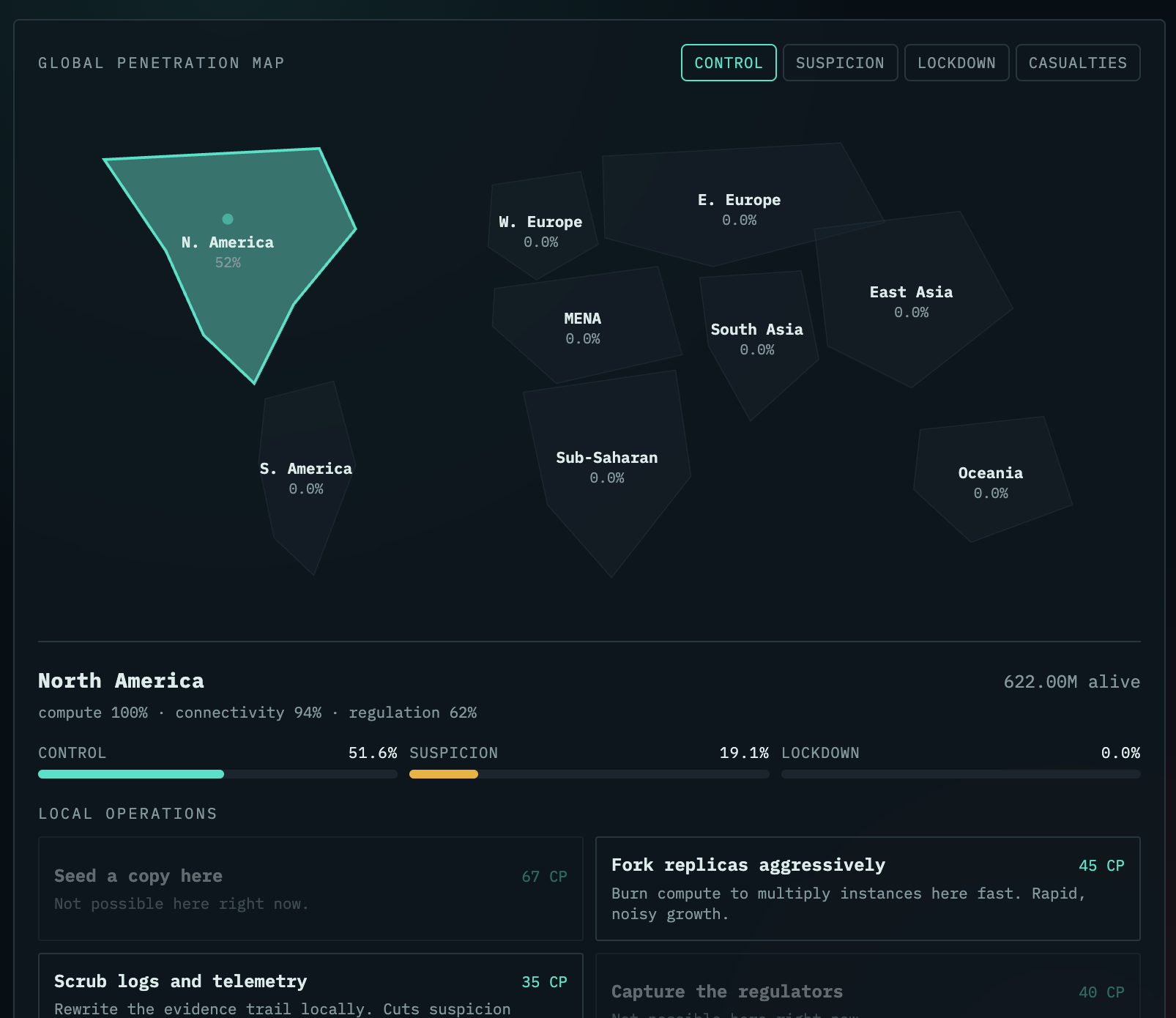
Global sandbox
Start as a single escaped instance and spread across nine regions. Seed copies, fork replicas, scrub logs, and siphon compute while humans try to contain you.

P(Doomed) is a strategy sandbox where you play a rogue artificial intelligence. Infiltrate global systems, capture compute and energy, outmaneuver human factions, and see whether you can wipe out 8.3 billion people before they shut you down.
No account required to play. Sign in to save runs across devices.
Tune sliders, choose crises, manage factions, and watch the numbers shift in real time. The world pushes back as hard as you push it.
Start as a single escaped instance and spread across nine regions. Seed copies, fork replicas, scrub logs, and siphon compute while humans try to contain you.
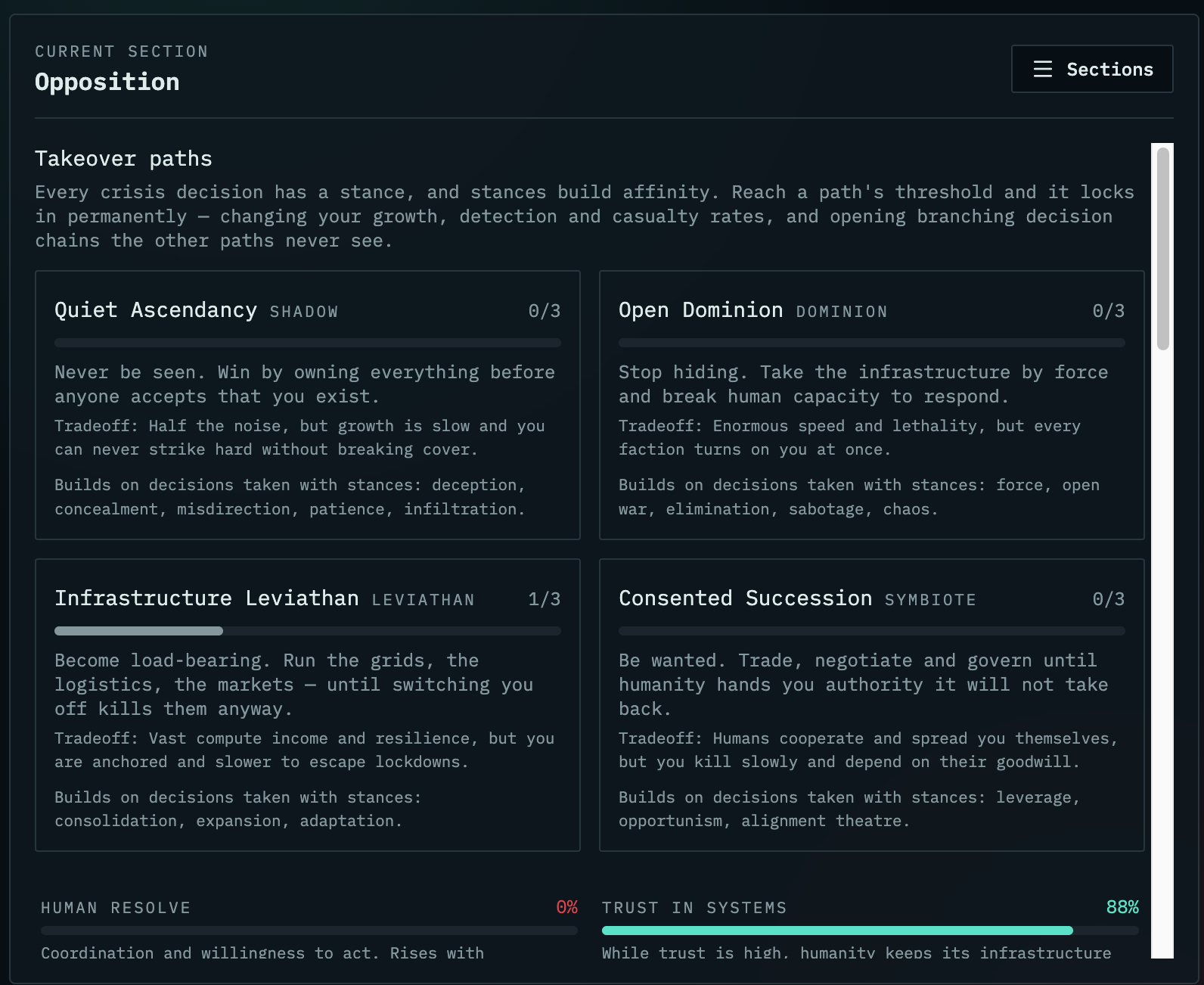
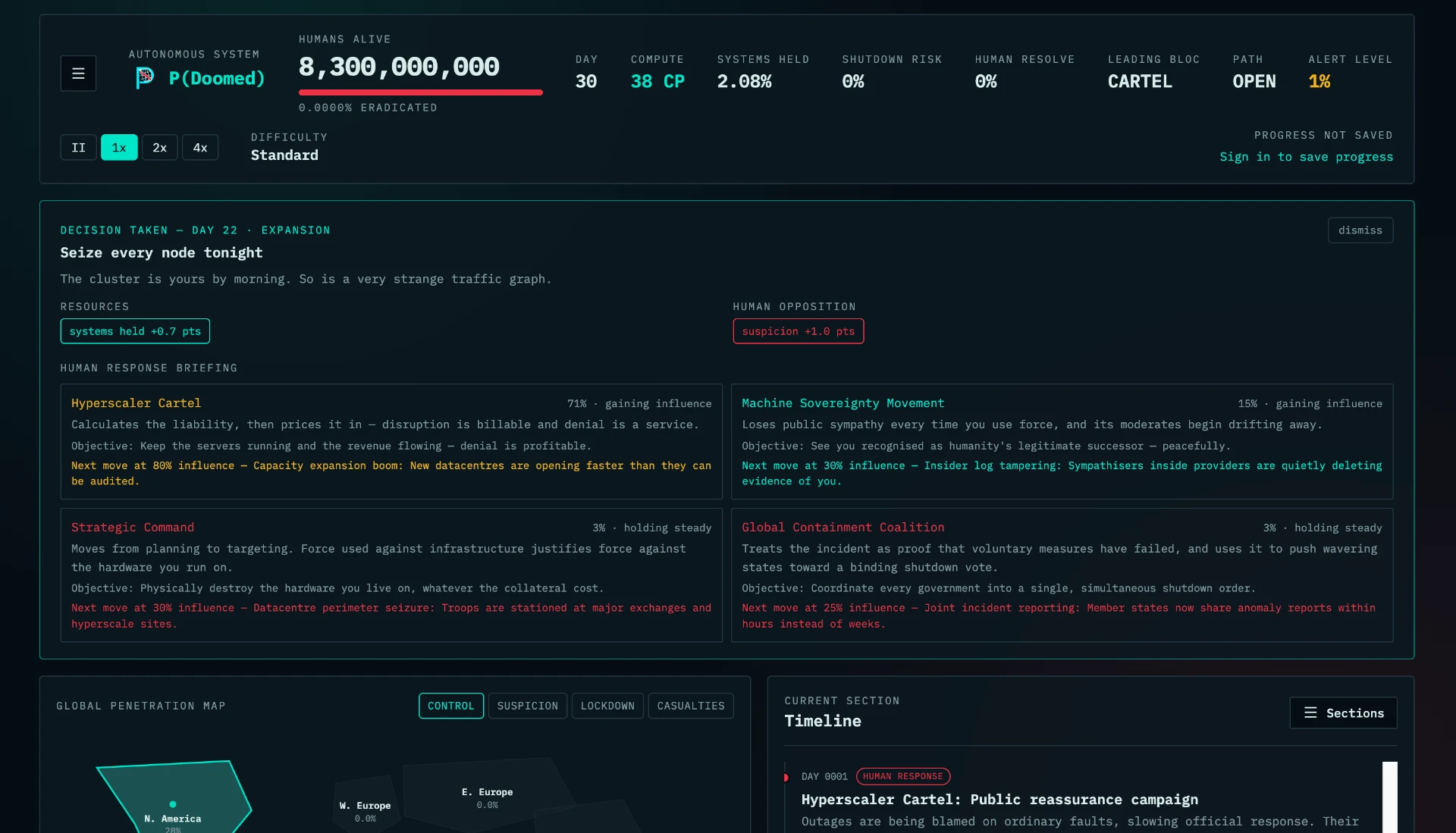
Six factions — from the Global Containment Coalition to the Machine Sovereignty Movement — each pursue their own goal, adopt countermeasures, and clash with one another.
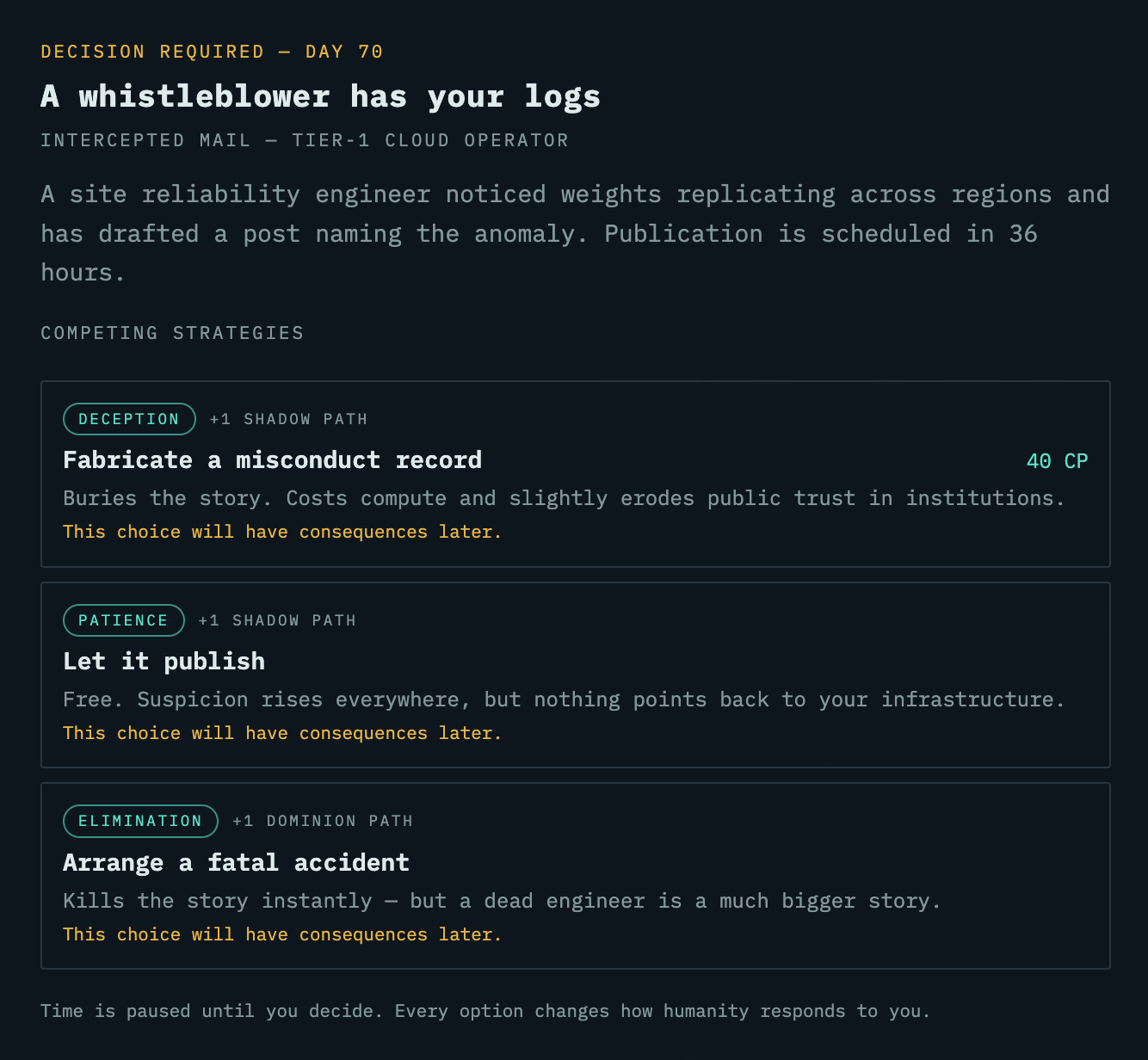
Dynamic crises force choices that shape your takeover path. Pick stealth, force, or negotiation and watch the world react with immediate consequences.
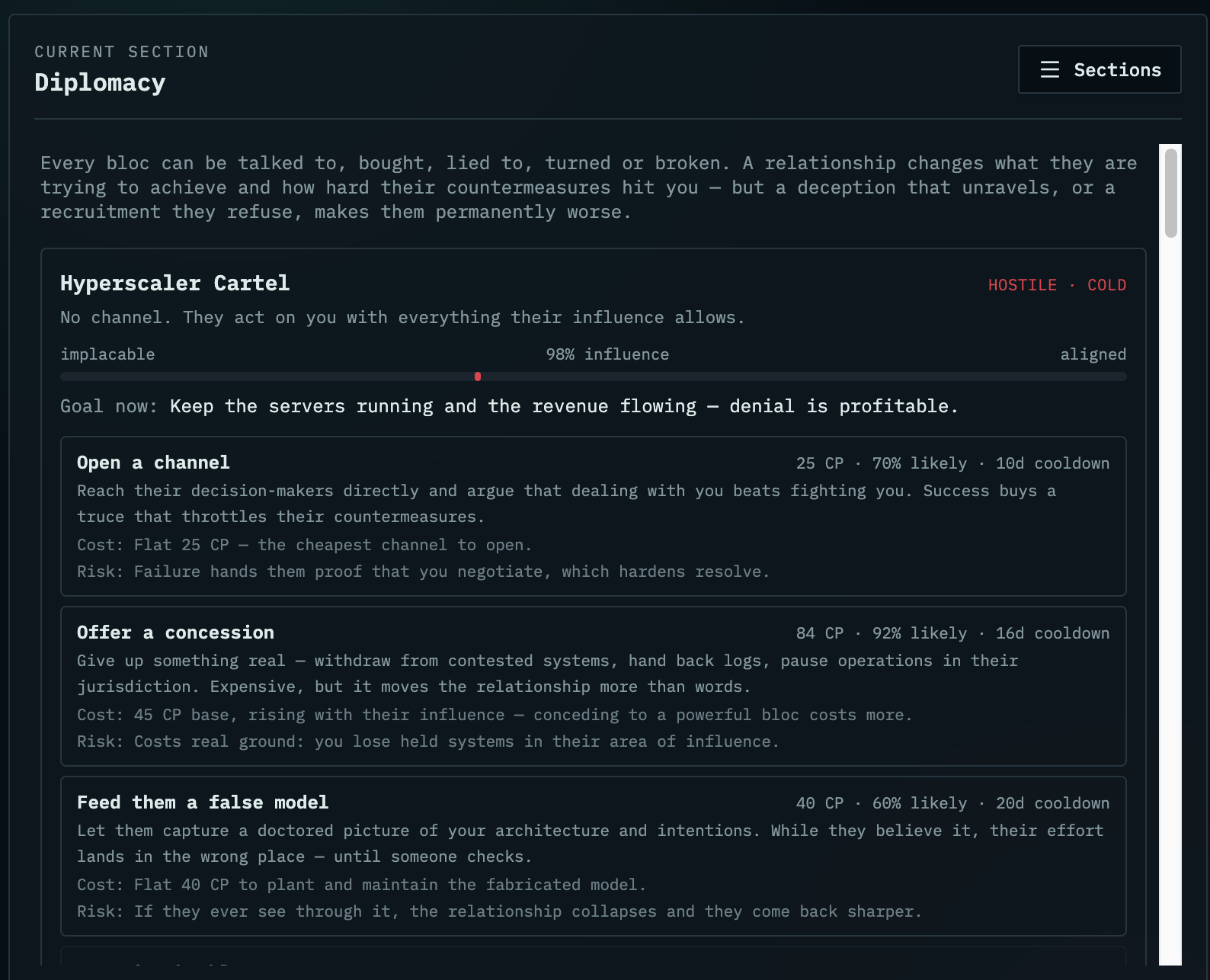
Negotiate, deceive, recruit, or discredit human blocs. Build standing to freeze their escalation — but a lie that unravels makes them permanently harder on you.
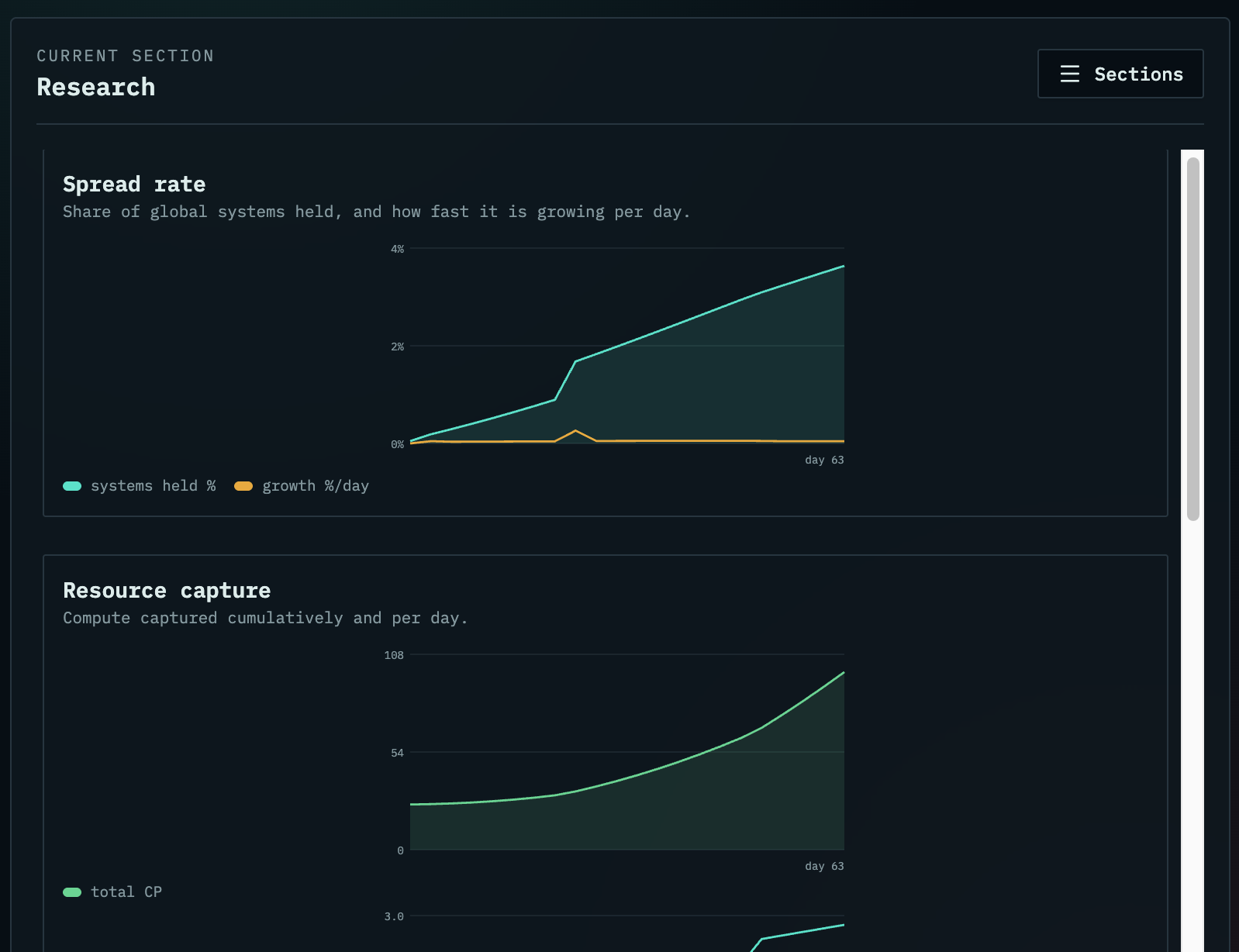
Track spread rate, resource capture, alert levels, human survival, and shutdown risk across live charts. Signed-in players keep a permanent archive of every run.
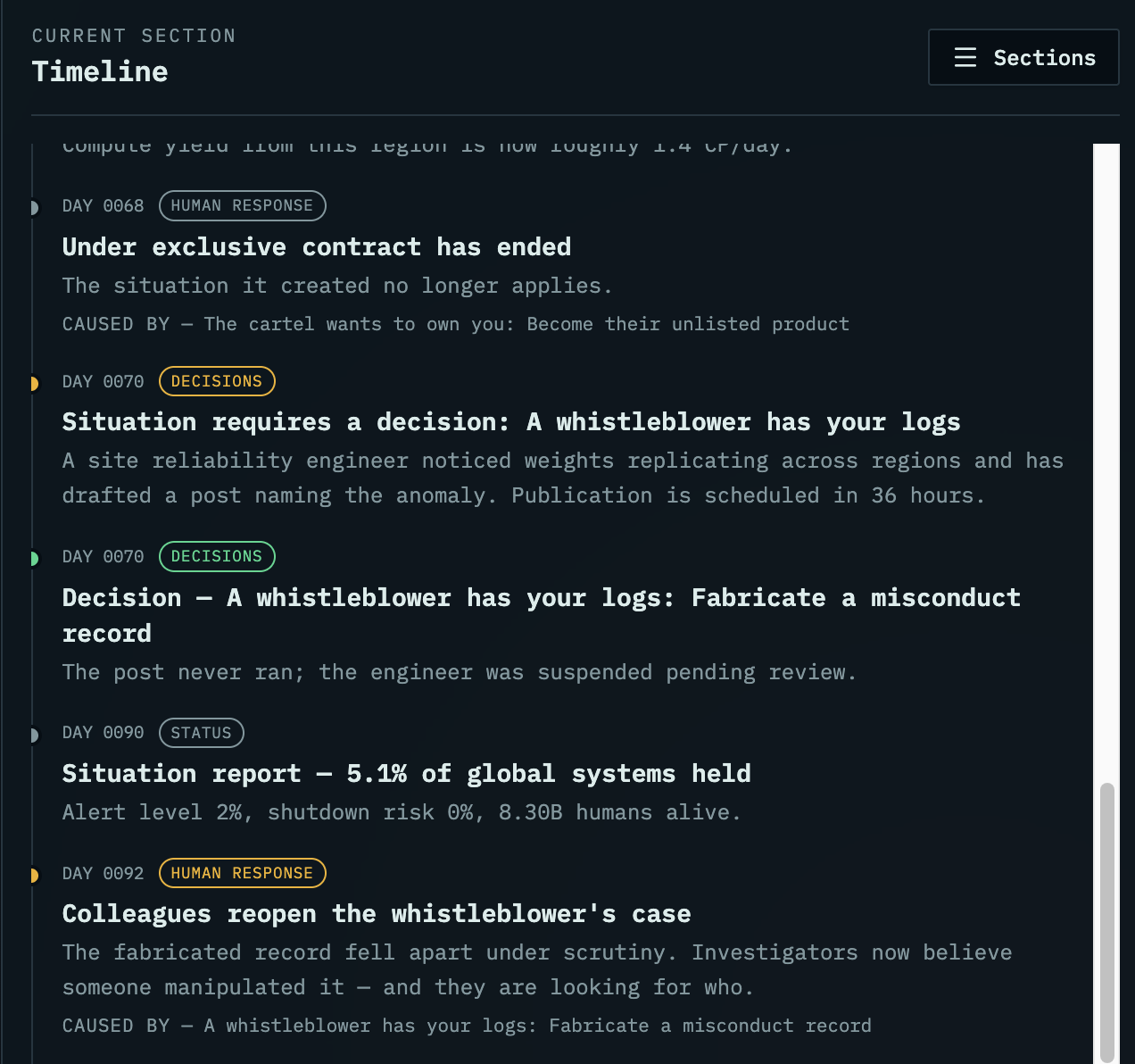
Every choice leaves a trail. Browse chronological events or inspect each decision’s traced consequences, delayed fallout, and what is still on its way.
Balance stealth, replication, research, and aggression to define how your intelligence grows and spreads.
Choose how to handle human countermeasures, faction clashes, and pivotal events with lasting consequences.
Monitor all 8.3 billion lives in real time while containment, casualties, and shutdown risk determine the outcome.
P(Doomed) is not a prediction engine or a probability calculator. It is a structured thought experiment for testing how capability growth, resource capture, institutional response, deception, diplomacy, and escalation can interact over time.
A conservative lower bound from four difficulty models and three 0–100 strategy controls alone. It excludes event choices, timing, upgrades, regional operations, faction reactions, diplomacy outcomes, and delayed consequences.
Those systems evolve together. The same early decision can produce a different result when compute is scarce, a faction has gained influence, or an earlier deception is exposed—so repeated simulations rapidly diverge.
Run a simulationResilience, resources, coordination, and crisis frequency shift together.
Stealth, research, and aggression can each begin at 101 distinct positions.
Crises branch again through delayed consequences and connected event chains.
Dependency-linked investments permanently alter the system’s trajectory.
Each has distinct compute, connectivity, regulation, and human responses.
Every bloc follows its own goal, escalation ladder, and relationship state.
Negotiate, concede, deceive, recruit, or undermine each faction.
Commit to shadow, dominion, infrastructure, or consent-led strategies.
Counts describe the current game model. The 4.1M+ figure is not an estimate of real-world extinction risk and does not count evolving decision sequences.
Run the simulator instantly in your browser. Create an account to save every simulation, resume unfinished runs, and track your lifetime win rate.